
You paid for a website. It's live. You can find it if you type your business name directly into Google. But when someone in your area searches "HVAC repair near me" or "emergency plumber [your city]", your site doesn't show up. Your competitors do. You don't.
This is one of the most common frustrations I hear from contractors. And it makes sense, the assumption is that having a website means being findable. That's not how it works. Google doesn't automatically know what you do, where you do it, or whether your site is more useful than the 40 other contractor sites in your area. You have to tell it, through specific technical signals, page structure, and content decisions that most generic site builders don't make for you.
In 2020, Ahrefs analyzed over a billion web pages and found that 91% of them get zero organic traffic from Google. That means most websites, including most contractor websites, are essentially invisible. But the reasons are specific and fixable. Here's what they are.
Key Takeaways
- 91% of web pages get zero organic traffic from Google (Ahrefs, 2020). Most contractor websites are invisible, not because SEO is complicated, but because five specific signals are missing.
- The most common cause: a site with no service-area pages, no individual service pages, and page titles that don't match what customers actually search.
- Google Search Console (free) will show you exactly which pages are indexed and which keywords you're appearing for, start there before changing anything.
- Competitors outranking you typically have more pages, more backlinks, or older site history. All three are closeable gaps. But they take consistent work, not one fix.
Start Here: Is Google Actually Indexing Your Site?
Before diagnosing why you're not ranking, confirm that Google has found your site at all. It sounds basic, but a surprising number of contractor sites have either never been submitted to Google or have a setting accidentally blocking search engines from crawling them.
The fastest check: go to Google and type site:yourdomain.com into the search bar. If results appear, Google has indexed your site. If nothing shows up, Google hasn't found it or something is blocking it.
How to Fix an Unindexed Site
Set up Google Search Console, it's free, and it's the direct line between your site and Google. Go to search.google.com/search-console, verify your domain, then submit your sitemap (typically at yourdomain.com/sitemap.xml). Google will show you which pages it's found, which it's crawled, and which have errors blocking them from appearing in results.
Also check that your website builder or developer hasn't left a "Disallow all robots" setting turned on. This is a common mistake when a site is built in a staging environment, the setting blocks search engines during development, and sometimes nobody turns it off when the site goes live. Your Google Search Console account will flag this immediately if it's the issue.
Your Site Is Missing the Pages Google Needs to Understand Your Business
This is the most common ranking problem for contractor websites. And the least obvious one. Most generic website builds give you a handful of pages: Home, About, Services, and Contact. That structure looks complete. For Google, it's almost useless.
According to Backlinko's analysis of 11.8 million Google search results in 2023, the average first-page result has 1,447 words. But more importantly, ranking pages are specific. They're about one service, in one location. A single "Services" page listing 12 trades in bullet points will not rank for any individual trade search, because it's trying to rank for everything and is therefore optimized for nothing.
Here's what the contractor sites that consistently generate leads have in common: they're organized around search queries, not business convenience. Instead of one Services page, they have individual pages for AC repair, furnace installation, duct cleaning, and commercial HVAC. Instead of "we serve the greater Dallas area," they have pages for Dallas, Plano, Garland, and Mesquite, each with unique content describing their work in that city. Every one of those pages is a separate entry point from Google. A 12-service, 4-city contractor who does this right has 48 possible entry points instead of one.

The Pages Your Contractor Site Needs
At minimum: one page per service, one page per city or county you serve (with unique content, not copy-pasted text with the city name swapped), a homepage that clearly names your primary service and primary location in the title and first heading, and a contact page with your full business name, address, and phone number exactly matching your Google Business Profile.
The homepage title tag matters more than most contractors realize. "Welcome to Smith HVAC" tells Google nothing. "HVAC Repair & Installation in Austin, TX | Smith HVAC" tells Google your service, your city, and your brand, three signals in one title. If your page title is your business name alone, that's an immediate fix that often produces movement in rankings within 4–6 weeks.
Your Site Has No Backlinks: And Google Sees That
Google uses backlinks, other websites linking to yours, as one of the strongest signals of a site's credibility and authority. A site with zero inbound links from other credible sites looks, to Google, like a site that nobody vouches for. In competitive local markets, contractors with more backlinks consistently outrank those without them, even if the content quality is similar.
There's no single published ranking of which citation source matters most for contractors specifically. But the general local SEO consensus, backed by Whitespark's annual Local Search Ranking Factors survey, puts citation consistency and volume in the top tier of controllable local ranking signals, alongside reviews and on-page content. Practically, that means it's worth building citations broadly rather than betting on one source.
The good news: getting early backlinks as a contractor doesn't require hiring a link-building agency. Start with citations, listings in directories like Yelp, Angi, HomeAdvisor, Houzz, and BBB. Each listing creates a backlink. Then submit to your local Chamber of Commerce, any trade associations you belong to (PHCC for plumbers, ACCA for HVAC, NRCA for roofers), and manufacturer partner directories if you're a certified installer.
These aren't high-authority links by themselves. But 10–15 consistent citations with your exact business name, address, and phone number sends a strong local relevance signal to Google. They're also free or low-cost to set up and should be part of every contractor's launch checklist, yet most generic website builders never mention them.
Technical Errors Are Blocking Your Rankings Without Telling You
A site can look completely fine in a browser and still have technical problems that make it difficult or impossible for Google to rank it. These issues are invisible to visitors but readable by search engine crawlers. And they silently suppress rankings for months before anyone notices.
The most common technical issues I find on contractor sites: duplicate page titles (every page has the same title, usually the business name), missing meta descriptions, images without alt text, broken internal links, and page load times over 4 seconds on mobile. None of these will make a site disappear from Google entirely. All of them suppress how high it ranks, often significantly. And because they're invisible in normal browsing, they sit unfixed for years.
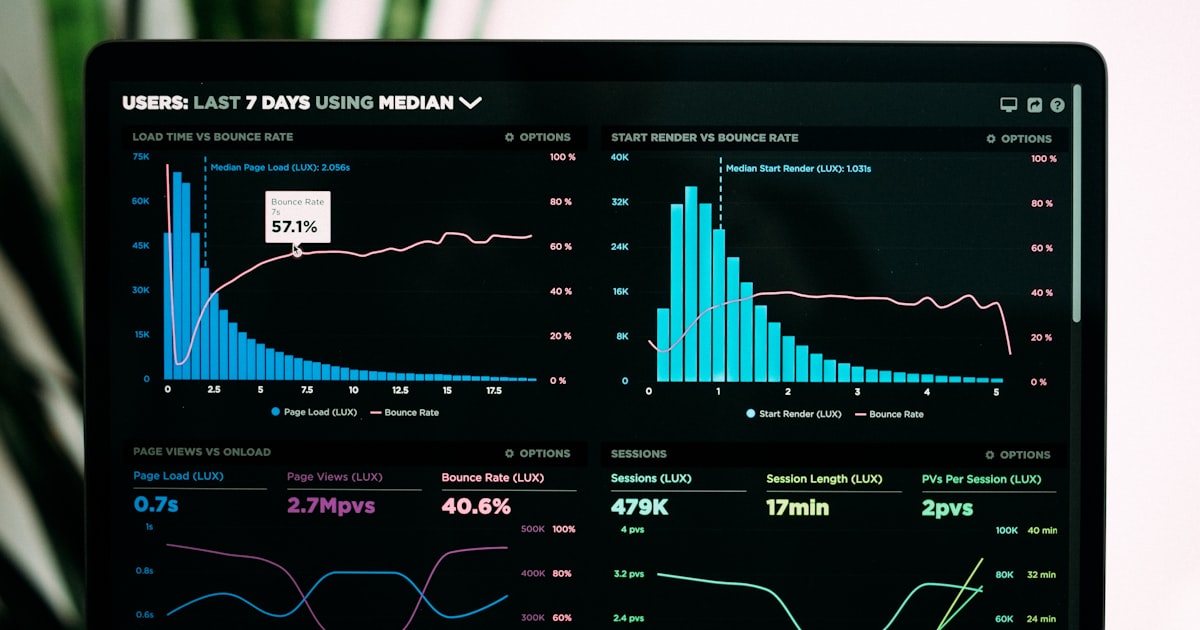
A 10-Minute Technical Audit You Can Do Yourself
Open Google Search Console (free, takes 15 minutes to set up). Go to the Coverage report, it shows you every page Google tried to index and every error it found. Then check the Core Web Vitals report. If your mobile performance score is flagged as "Poor," that means Google is actively penalizing your ranking speed. Run a free PageSpeed Insights test (pagespeed.web.dev) on your homepage to see exactly what's slow and what to fix.
Also search your business name on Google and look at your listing. Does it say "Website" or does it link correctly? Is your business category the right one, RoofingContractor, Plumber, HVACContractor? An incorrect or missing category is a signal Google uses for local ranking, and it's a 30-second fix inside your Google Business Profile.
How Long Does It Take: And What Should You Realistically Expect?
SEO for contractor websites isn't a switch. It's a build. New sites typically need 3–6 months to appear consistently in competitive local results. Established sites with technical problems can see movement in 4–8 weeks once those problems are fixed. Sites in smaller markets or less competitive service areas often move faster.
The first-page result in Google organic gets 27.6% of all clicks in that search, according to Backlinko's CTR study of 12.1 million search queries. The second result gets 15.8%. By position 10, still on page one, you're getting around 2.5%. Below page one, clicks are negligible. The math makes the effort clear: the goal isn't to show up somewhere. It's to show up near the top of page one for the queries your best customers are searching.
That doesn't happen overnight. But contractors who consistently add service-area pages, earn local citations, fix technical issues, and improve their Google Business Profile are almost always ranking better 6 months after starting than they were before. The contractors who rank on page one aren't there because of luck. They've done specific, repeatable work. That work is learnable. And it's where local SEO for contractors starts.
Want to know why your contractor site isn't ranking?
CopperBuilds builds and audits contractor websites that are built to rank from day one. Flat-rate pricing from $1,200, plus month-to-month SEO retainers when you're ready to grow. No lock-in contracts.
Get a Free Site ReviewFrequently Asked Questions
The Real Reason Most Contractor Sites Don't Rank
It's not that SEO is complicated. It's that most contractor websites were built without Google in mind. A site built for a portfolio, one that looks good and describes what you do, is different from a site built for search, one that's structured to match what customers actually type when they need you.
The five issues covered here, indexing, missing pages, no backlinks, technical errors, and timeline expectations, account for the vast majority of contractor ranking problems. None of them are exotic. All of them are fixable. The question is which one is your bottleneck right now.
Start with Google Search Console. It's free, it's accurate, and it will point you at the real problem faster than any other tool. If you want a second opinion on what's holding your site back, reach out, we review contractor sites regularly and can usually identify the core issue in one look. Once you've diagnosed the bottleneck, our step-by-step contractor SEO guide covers the full build-out. And if you're starting from scratch, see how to choose a web designer who builds contractor sites with rankings in mind from the beginning.
Luis builds lead-focused websites for home service businesses across the US. He's reviewed and audited contractor websites in HVAC, plumbing, roofing, and electrical and writes about the specific patterns that separate contractor sites that rank from those that don't.